Importance of Coupling Alignment Proper coupling alignment is essential for stable equipment operation. It effectively minimizes abnormal vibrations, prevents premature failure of bearings and shaft seals, extends equipment service life, and reduces the risk of unplanned downtime.
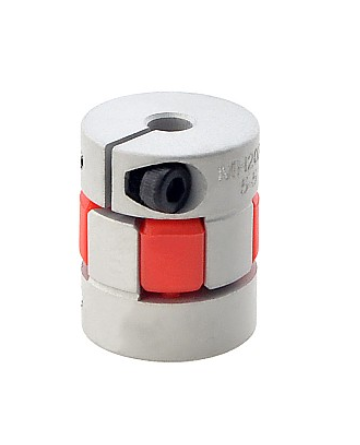
Basic Types of Misalignment
- Parallel Misalignment: The rotational centerlines of the two shafts are parallel but not collinear, resulting in a radial offset.
- Angular Misalignment: The rotational centerlines of the two shafts intersect at a point and form an angle, creating a "seesaw" effect.
Common Alignment Methods
- Straightedge and Feeler Gauge Method
- Application: Basic tools for quick, approximate measurements.
- Procedure: Place a straightedge against the outer circumference of the coupling halves and use a feeler gauge to measure the face gap. Adjust incrementally until the clearance is uniform.
- Dial Indicator Method
- Application: A standard method for precise mechanical alignment.
- Procedure: Mount dial indicators to measure radial and axial (face) readings, calculate deviations, and adjust the motor feet to eliminate errors.
- Laser Alignment Method
- Application: Modern dedicated equipment for high-efficiency, high-precision alignment.
- Procedure: Install the laser alignment instrument, rotate the shafts as prompted, and read the adjustment values directly for precise correction.
Alignment Procedure
- Ensure all equipment is completely shut down and powered off.
- Perform rough alignment using basic tools.
- Use high-precision tools for fine alignment.
- Secure all fasteners after alignment and conduct a final inspection.
Common Issues and Solutions
- Slippage: Check that the coupling is securely installed with no looseness or damage.
- Vibration: May result from improper dynamic balancing or insufficient lubrication; perform balancing calibration and apply lubrication as needed.
- Overheating: Check the lubrication condition and ensure the grease is sufficient and free of contamination.
- Abnormal Noise: May be caused by wear or inadequate lubrication; inspect components for wear and replace them promptly.
- Difficulty in Disassembly: May be caused by misaligned keyways; allow the coupling to cool and use appropriate puller tools to extract it gradually.
Conclusion
Mastering proper coupling alignment methods is crucial for ensuring stable equipment operation. With this guide, technicians can effectively perform alignment tasks, enhancing the performance and reliability of the entire mechanical system.