In stepper motor control, full-step, half-step, and microstepping each have their own strengths and weaknesses. Below, we analyze their performance differences.
Step Angle Accuracy Comparison
- Full-Step Control: The motor rotates in fixed step angles with high step angle accuracy.
- Half-Step Control: The motor alternates between full-step and half-step positions, doubling the resolution compared to full-step mode while maintaining similar positioning accuracy.
- Microstepping Control: Enables finer step divisions, providing the highest resolution for smoother motion. Note that absolute positioning accuracy is still limited by the motor's mechanical construction.
Resolution and Speed Stability
- Full-Step Control: Simple and direct, with relatively stable speed.
- Half-Step Control: Offers higher resolution and smoother motion compared to full-step, with good speed stability.
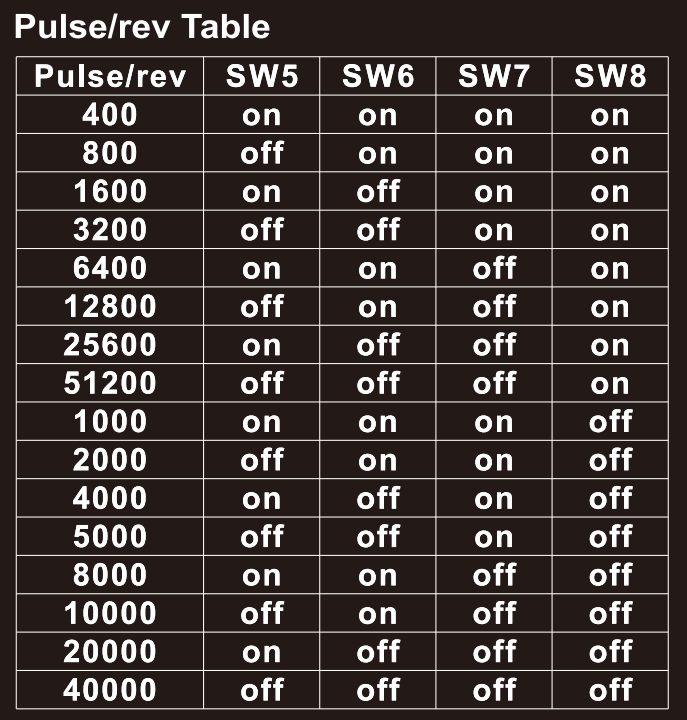
- Microstepping Control: Achieves the highest resolution and smoothest motion. Our drives have microstepping algorithms built in—simply configure via DIP switches.
Noise and Power Consumption
- Full-Step Control: Produces higher audible noise due to torque ripple and resonance at each step transition. Power consumption is comparable across modes depending on current settings.
- Half-Step Control: Reduces noise compared to full-step, though some audible noise remains.
- Microstepping Control: Enables smoother motion, resulting in lower noise.
Suitable Application Scenarios
- Full-Step Control: Ideal for applications with low precision requirements and cost constraints, such as simple automation equipment.
- Half-Step Control: Suitable for scenarios requiring higher resolution with moderate cost pressure, such as stepper motor applications in home appliances.
- Microstepping Control: Best for applications demanding high resolution and smooth motion, such as medical devices and precision instruments.
Conclusion
By comparing full-step, half-step, and microstepping in terms of step angle accuracy, resolution, speed stability, noise, and power consumption, users can better select the appropriate stepper motor control method for their specific application needs.
On StepperOnline drives, you can select the stepping mode using the microstep DIP switches. Refer to your drive's user manual for switch configurations.