1. What Is a Linear Motor and a Linear Actuator?
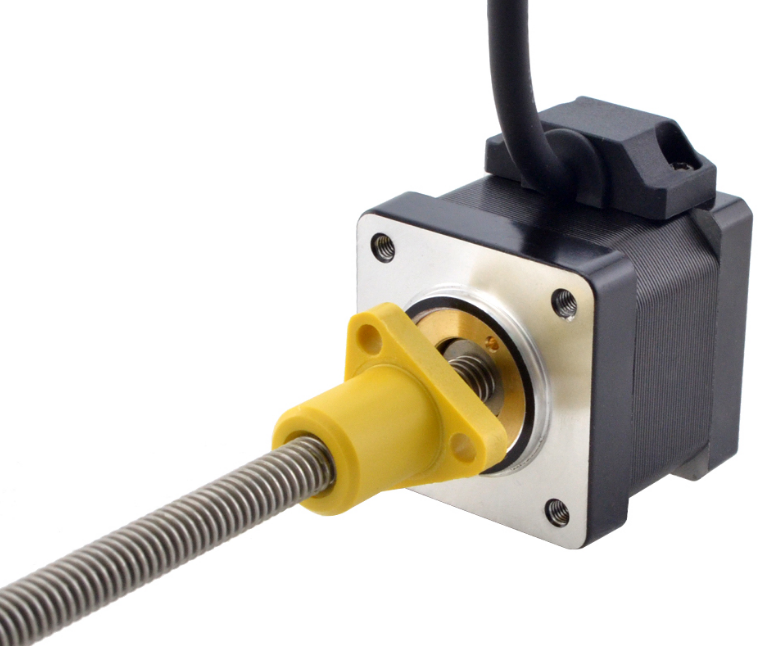
A linear motor (also known as a linear stepper motor) is a mechanical device that converts rotational motion into linear motion. The simplest design integrates a lead screw and nut directly into the stepper motor, performing the entire rotary-to-linear conversion inside the motor housing. This greatly simplifies the structural design and allows many applications to achieve precise linear motion without external mechanical linkage components.
The basic principle is as follows: a nut is installed inside the rotor of the motor, and a lead screw meshes with this nut. To prevent the lead screw from rotating together with the rotor, its rotation must be constrained. With the screw's rotation locked, the rotation of the rotor causes the screw to move in a straight line, producing linear motion.
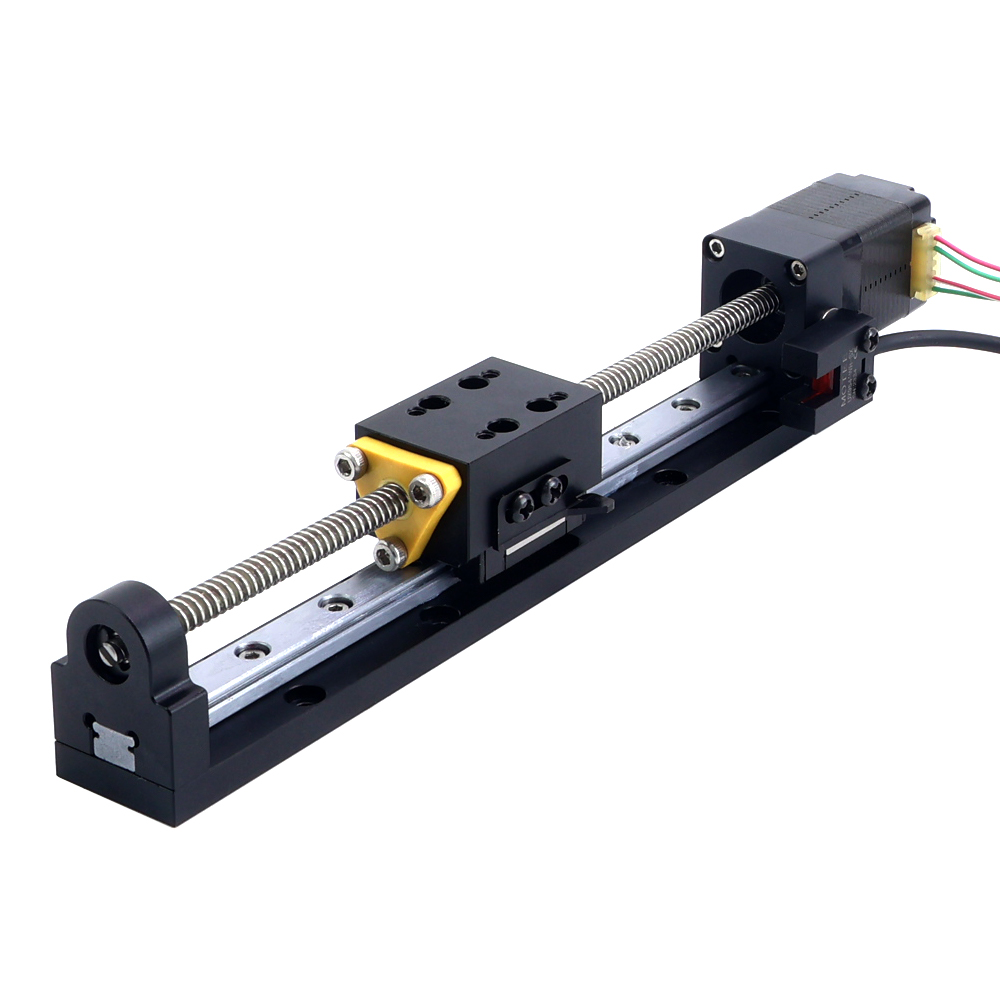
A linear actuator (also called a linear motion module) is a complete transmission system that typically consists of linear guide rails, aluminum alloy profiles, supports, a motor, photoelectric switches, and other components. It converts electrical energy into linear mechanical motion. Linear actuators offer a simple structure, easy long-stroke capability, high acceleration, fast response, and high precision.
Linear actuators on the market can be broadly divided into two categories:
- Timing belt linear actuators: A timing belt is installed on the drive shafts at both ends of the actuator. A slider, to which a workpiece or equipment can be attached, is fixed to the belt. When the motor drives the shafts, the belt moves the slider along the guide rail.
- Ball screw linear actuators: A motor drives a ball screw, which moves the slider along the guide rail. Our current product line features this type with a simplified design: the coupling has been eliminated, and the motor is directly integrated into the module. For more information on the advantages and disadvantages of linear actuators with or without couplings, please read What Are the Advantages and Disadvantages of Linear Actuators with or without Couplings?.
Note: In this article, "linear actuator" refers specifically to our LMD series. Our newly launched LK, LG, and LA series are motorless linear actuators (i.e., they do not include a motor).
2. Differences Between a Linear Motor and a Linear Actuator
A linear actuator is a complete motion system that integrates the motor with supporting components such as guide rails, sensors, and a mechanical structure. This integrated design allows linear actuators to be deployed faster and integrated more easily with existing systems compared to standalone linear motors.
Linear actuators offer higher integration and greater ease of use. They typically have a simpler installation process, fewer wiring connections, and better overall system performance. In addition, linear actuators generally provide better compatibility with a wide range of automation equipment.
3. How to Choose Between a Linear Motor and a Linear Actuator
Linear motors are typically used in applications that require precise linear motion, such as CNC machine tools, automated production lines, and medical equipment. Due to their compact integration and ease of use, linear actuators are more suitable for applications that require rapid deployment and system integration, such as automated assembly lines, logistics systems, and industrial robots.
If you require a customized control system, specific sensor configurations, or greater design flexibility, a linear actuator may be the better choice. If the application is relatively simple, you can choose a standalone linear motor and perform custom integration as needed.
As a general guideline:
- Low load, long stroke, high accuracy → A linear motor is often the better choice.
- High load, short stroke, high accuracy requirements → A linear actuator is often the better choice.