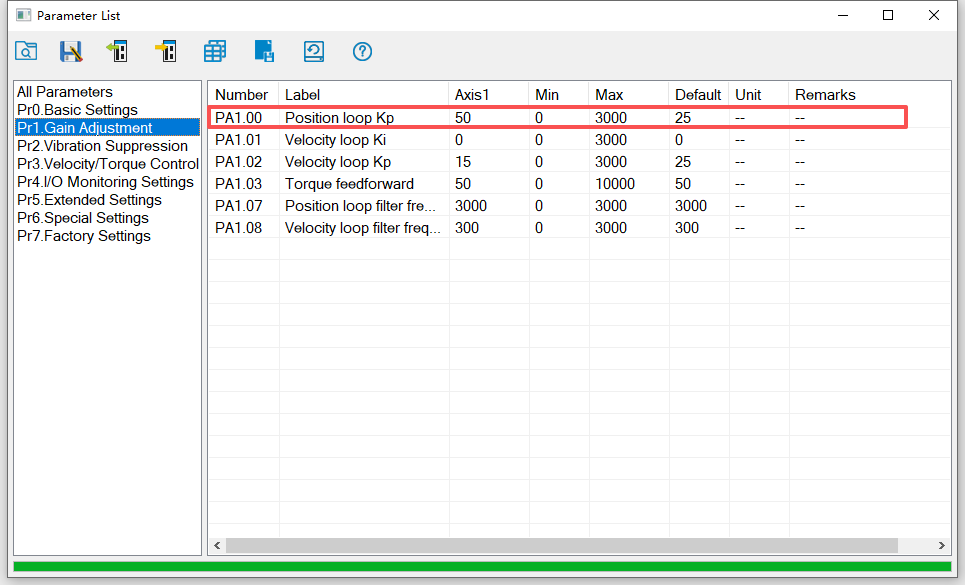
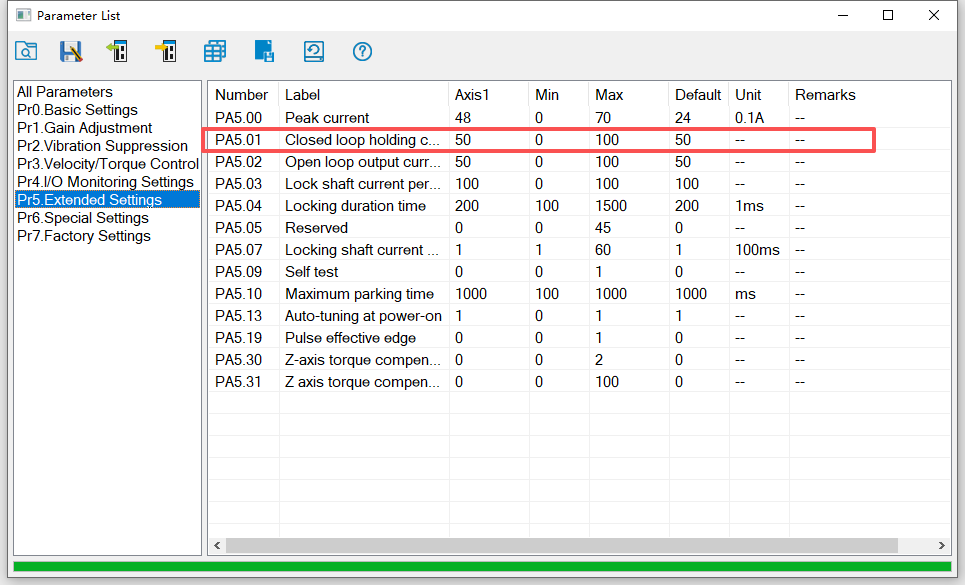
Operating a stepper motor under high-inertia, low-speed conditions without a gearbox is inherently challenging. At low speeds, cogging torque can cause uneven, jerky motion with noticeable torque ripple. In such applications, increasing the closed-loop holding current (e.g., from 50% to 75%) and appropriately raising the position loop proportional gain (Kp) can provide some improvement, but the effect is likely to be limited.
Note: These parameters can only be adjusted via software on closed-loop drives; this adjustment is not available on open-loop drives.
Using the T-series closed-loop stepper drive as an example:
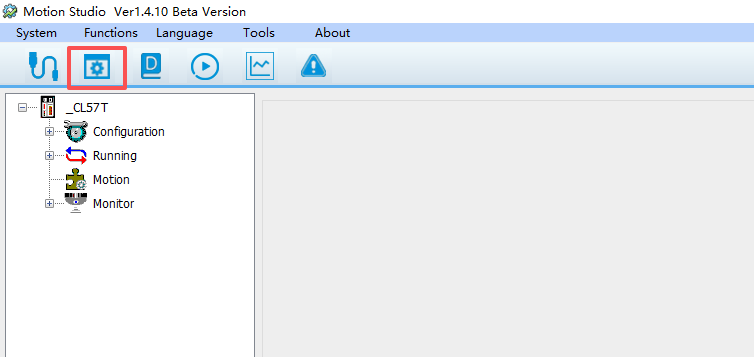
Open the parameter list.
- Position Loop Gain
- Closed-Loop Holding Current
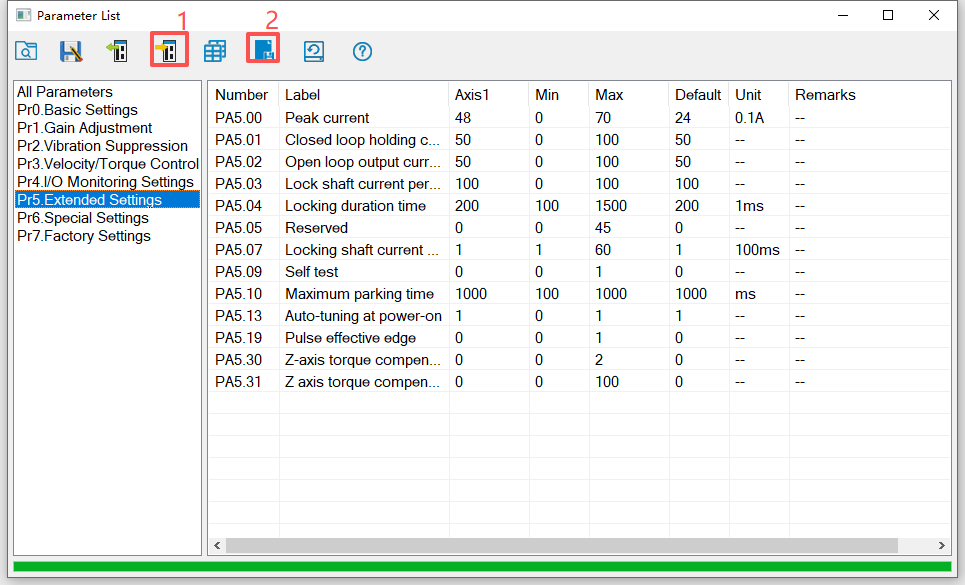
After modifying the parameters, send and save them to apply the changes.
Under these circumstances, the optimal solution is to add a gearbox.
Adding a gearbox provides the following advantages:
- Inertia Matching: The gearbox reduces the load inertia reflected to the motor shaft by the square of the gear ratio, significantly improving inertia matching. This makes the system more responsive and the control more stable.
- Torque Multiplication: A core function of the gearbox is to multiply the output torque by the gear ratio. This allows the system to easily overcome the motor's cogging torque and load resistance, ensuring smooth startup and operation.
- Increased Motor Operating Speed: With a gearbox, the motor itself can operate in the mid-to-high speed range where its performance characteristics are better. This effectively avoids the issues of pronounced cogging torque and high vibration at low speeds. The motion is then reduced by the gearbox to the desired low output speed, resulting in smooth movement.