A high-temperature motor is designed to operate reliably in extremely hot environments while maintaining excellent stability. These motors are widely used in metallurgy, petrochemicals, power generation, aviation, and other industrial fields, helping manufacturers significantly increase output, improve efficiency, and reduce production costs.
This article uses the high-temperature motor 17HS19-2004S1-H and the standard motor 17HS19-2004S1 as examples to explain the key differences between the two in detail.
1. Insulation Class
The high-temperature motors available on our website feature an H-class insulation rating, while standard motors use a B-class insulation rating. For detailed information on insulation classes, please refer to Insulation Class, Temperature Rise and Duty Cycles of High-temp Motors.
2. Motor Materials
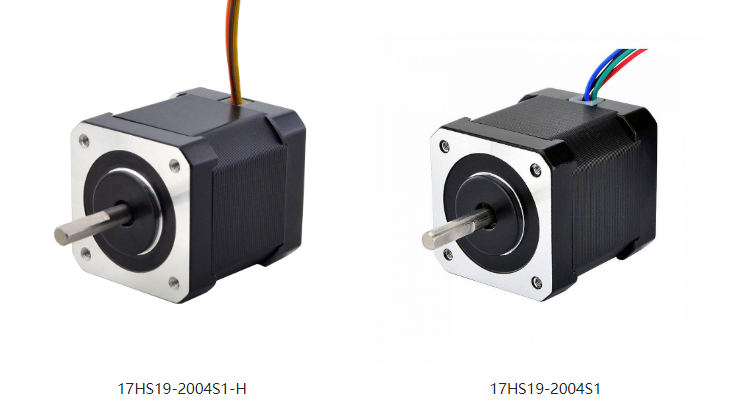
To build a high-temperature motor, the temperature resistance of each material must be upgraded. The key differences are outlined below.
Magnets
High-temperature motors use special high-temperature-resistant alloys for their magnets, similar to those used in motors designed for space or vacuum environments. In contrast, the magnets in standard motors lose magnetic strength when exposed to high temperatures.
Bearings
The bearings and lubrication systems in high-temperature motors are specially designed to ensure reliable operation in hot environments. These motors require high-temperature grease that can withstand elevated operating temperatures without breaking down.
Coil Bobbin
The coil bobbin is a critical component of a stepper motor. It secures and supports the coil windings and serves as the primary structural carrier.
Standard coil bobbins are typically made from plastic materials such as nylon or PBT, which have relatively low upper temperature limits. If the ambient temperature exceeds these limits, the bobbin can deform, crack, or even melt, potentially causing a short circuit and creating a safety hazard.
Cables
As shown in the image above, the cables of high-temperature motors differ visibly from those of standard motors. Due to their higher temperature resistance requirements, high-temperature motor cables are made from specialized materials. For example, in the 17HS19-2004S1-H motor, the enameled wire can withstand temperatures up to 200 °C, maintaining reliable electrical performance in high-temperature environments.
3. Application Scenarios
High-temperature motors are primarily used in demanding industrial environments such as oil refineries, steel mills, and glass manufacturing plants, where equipment must operate in extreme heat.
Standard motors are generally more compact, easier to install, and simpler to maintain. They are commonly used in household appliances such as washing machines and vacuum cleaners, as well as in light industrial equipment.