As a power transmission component, every gearbox inevitably exhibits a certain amount of drag torque (friction torque) during operation. The magnitude of this drag torque varies among gearbox types and depends on several factors, including gearbox type, size, and gear ratio.
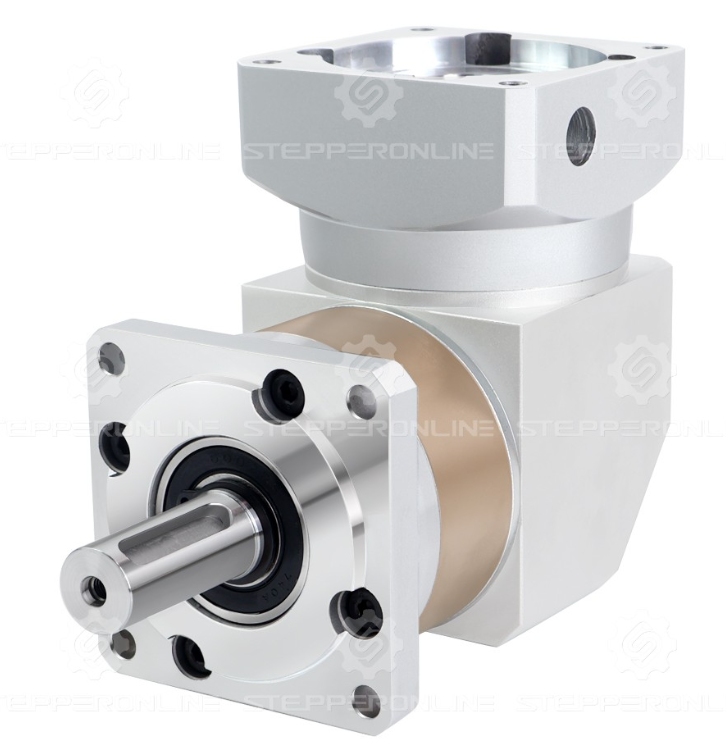
Generally, a right-angle gearbox exhibits higher drag torque than a standard planetary gearbox. This difference is closely related to the internal structure and design of the right-angle gearbox.
This article explains why right-angle gearboxes exhibit higher drag torque.
- The transmission structure of the right-angle gearbox causes higher drag torque
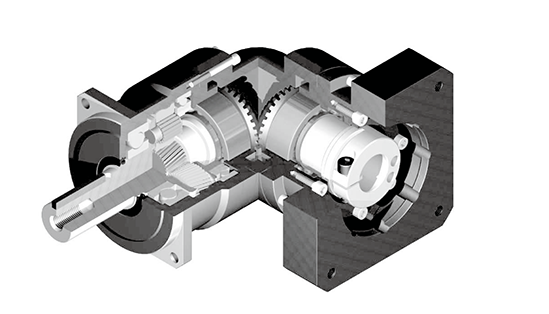
To change the output direction by 90°, a right-angle gearbox uses a pair of bevel gears instead of the planetary gear train found in a standard planetary gearbox. Compared with a planetary gear train, bevel gears inherently produce greater friction losses. This is one of the primary reasons why right-angle gearboxes exhibit higher drag torque.
- The amount of grease in the right-angle gearbox contributes to higher drag torque
To accommodate a pair of bevel gears mounted at a 90° angle, the internal cavity of a right-angle gearbox is larger. To ensure the bevel gears are fully lubricated, more grease is added to the right-angle gearbox. The additional grease increases viscous drag on the gears during operation, further raising the overall drag torque.
- Backlash adjustment of the right-angle gearbox leads to higher drag torque
During assembly, the backlash between the bevel gears must be carefully adjusted. To ensure optimal performance, this backlash is generally set to a smaller value. Tighter backlash increases contact pressure between the gear teeth, which in turn raises friction losses and contributes to the higher drag torque of the right-angle gearbox.
For these reasons, right-angle gearboxes exhibit higher drag torque than standard planetary gearboxes.
Given the higher drag torque of right-angle gearboxes, the following points should be noted during use to prevent the motor from stalling at startup due to excessive load:
- Reduce acceleration
The starting torque required by the equipment depends on the load and acceleration. When drag torque is high, a longer acceleration time reduces the peak torque demand, helping prevent the motor from stalling at startup.
- Use a motor with sufficient torque
The drag torque of the gearbox is part of the total equipment load. When selecting a motor, account for the gearbox drag torque and choose a motor with sufficient torque, ensuring an adequate torque margin.
- Ensure that the driver parameters are set correctly
Driver parameter settings directly affect motor performance. Ensure that the driver parameters are configured properly so the motor can deliver sufficient torque throughout the operating range.