When discussing the voltage of a stepper motor, it is important to first clarify whether you are referring to the Rated Voltage or the Supply Voltage.
Rated Voltage
The rated voltage of a motor can be obtained directly from the motor's datasheet. It is usually listed in the technical data section, along with other motor parameters such as rated current, holding torque, and step angle.
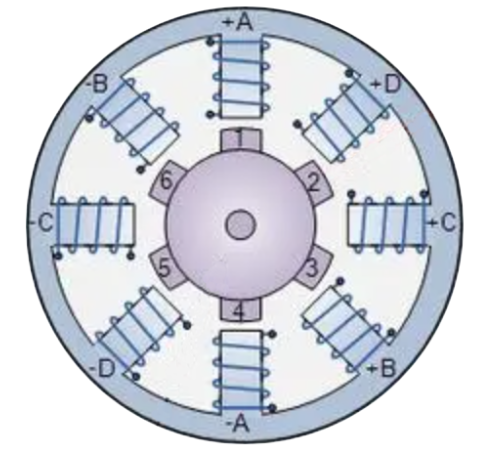
If you do not have access to the motor datasheet or the rated voltage is not listed, you can determine the rated voltage by measuring the resistance of the motor coils. Using a multimeter set to resistance mode, measure the resistance of each coil. The resistance values of all coils should be approximately equal. You can then calculate the rated voltage using Ohm's Law:
Voltage = Current × Resistance
For example, if the rated current of the motor is 1.5 A and one coil has a resistance of 1.2 Ω, the rated voltage of the motor can be calculated as follows:
Voltage = 1.5 A × 1.2 Ω = 1.8 V
Supply Voltage
Each stepper motor must be connected to a driver in order to function, so the supply voltage is applied to the stepper motor driver rather than directly to the motor. When discussing the operating voltage of a stepper motor system, the supply voltage is typically what is meant.
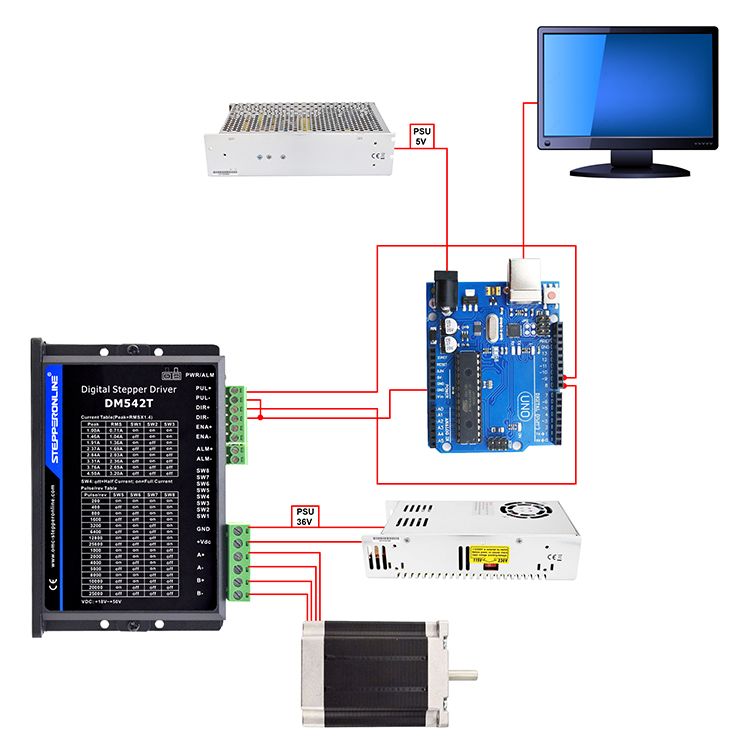
Note: There are two types of stepper motor drive modes: constant current drive and constant voltage drive. Constant voltage drive is rarely used in modern applications, as constant current drive offers superior performance.
Unlike rated voltage, supply voltage is determined by the driver's input voltage specifications. The driver's input voltage range is typically listed on its nameplate or in the user manual. This means that the same motor and driver combination can operate at different supply voltages within the specified range.
The following table shows the recommended supply voltages based on motor frame size. Higher supply voltages result in better motor performance at high speeds, but also lead to increased heat generation.
| Motor Size | Supply Voltage |
|---|---|
| NEMA 8 – NEMA 17 | 12 – 24 VDC |
| NEMA 23, NEMA 24 | 24 – 48 VDC |
| NEMA 34 | 36 – 60 VDC / 30 – 70 VAC |
| NEMA 42 – NEMA 52 | 60 – 100 VDC / 110 – 220 VAC |
Please note that the recommended supply voltages are not absolute values and can be adjusted depending on the rated current of the motor and the requirements of the application.
If you have any questions, please contact STEPPERONLINE technical support.