If your ICL-RS series integrated stepper motor experiences axis vibration during operation, a thorough hardware inspection must be completed before attempting to resolve the vibration through software settings. Check for issues such as loose belts, gear runout, and coupling misalignment to ensure there is no mechanical looseness, wear, or misalignment. After confirming that the axis vibration is not caused by mechanical factors, follow the steps below to adjust parameters and resolve the vibration issue:
- First, reduce the position loop Kp and speed loop Kp simultaneously. Observe changes in vibration and make fine adjustments accordingly.
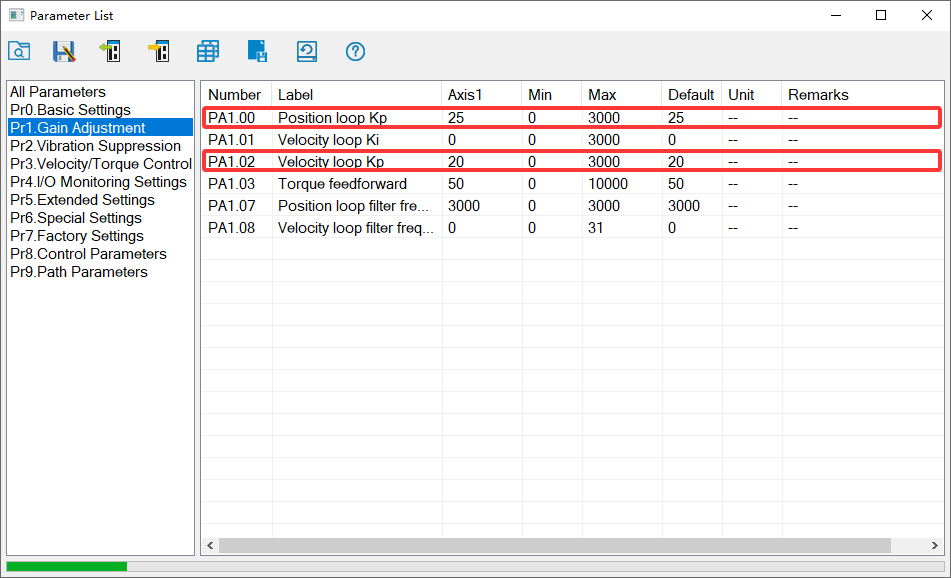
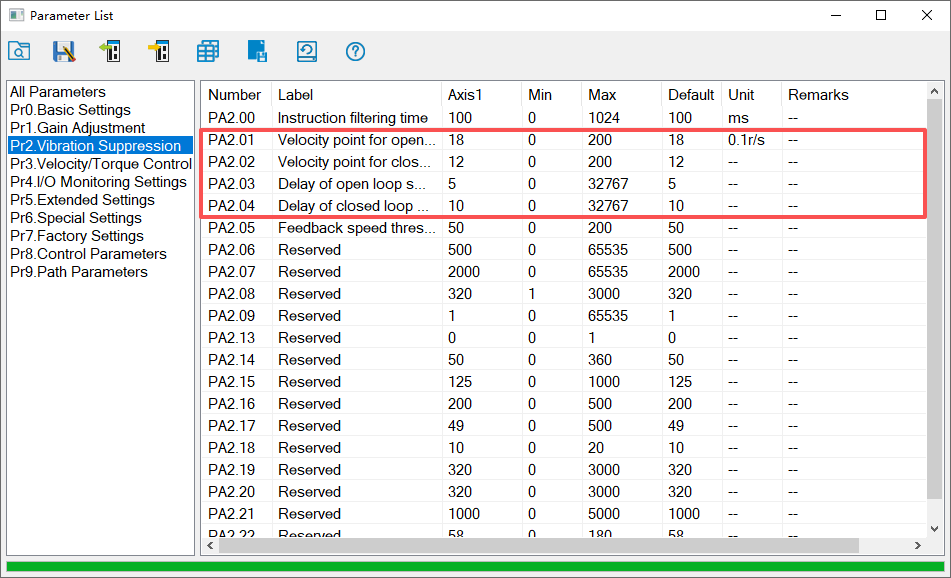
- If vibration occurs primarily during mode switching, adjust parameters Pr2.01 to Pr2.04 (speed switching point and delay time) based on tuning results to ensure smoother switching. During this process, adjust parameters in small increments, modifying only one parameter at a time. Verify the effect through actual testing to balance vibration reduction and precision.
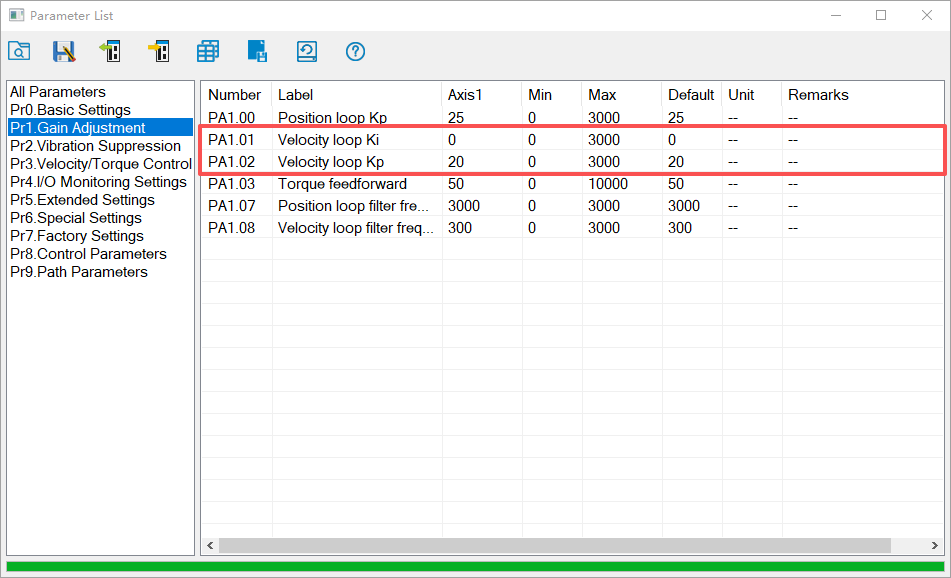
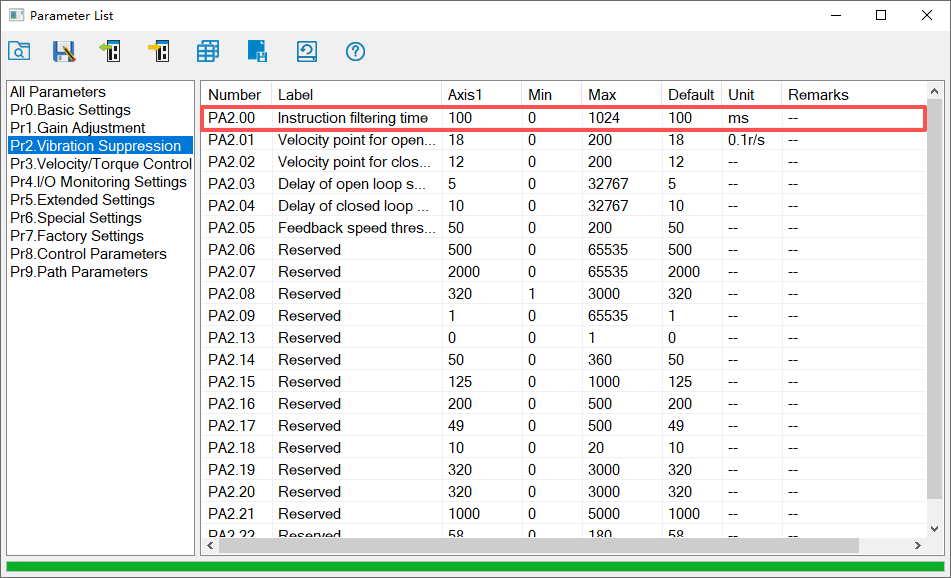
- If the motor vibrates at low speeds:
- Increase the value of Pr1.02.
- Adjust Pr1.01 to approximately 20% of the modified Pr1.02 value.
- Increase the microstep resolution as appropriate.
- Change the default value of Pr2.00 to 20–30.
If vibration remains noticeable, set the motor DIP switch SW8 to the ON position.
- If the motor vibrates at high speeds:
- Increase the position loop gain (Pr1.00) to improve response speed. Adjust in increments of 2–5 at a time during tuning.
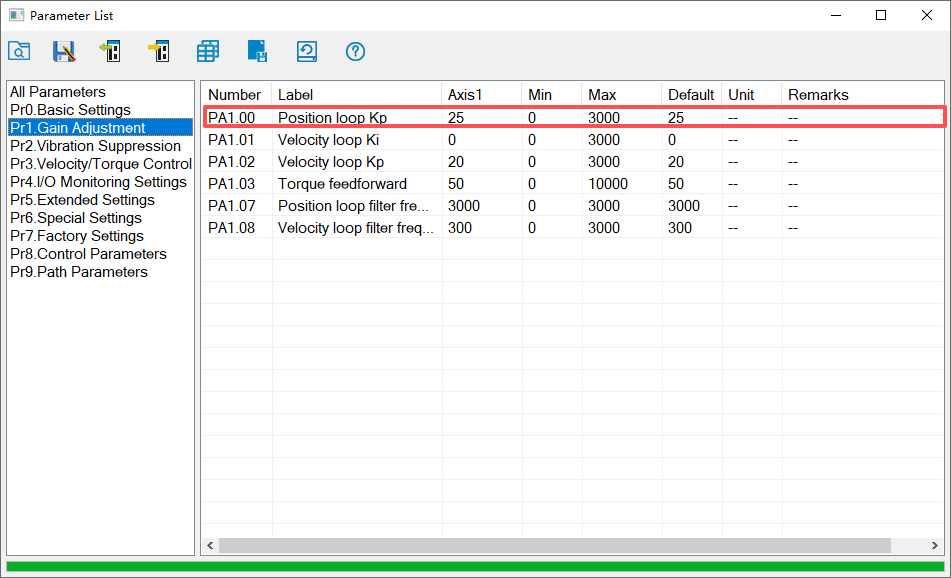
Important Notes: After modifying the above parameters, you must click the Save button (disk icon) in the upper-left corner of the software toolbar for the changes to take effect.
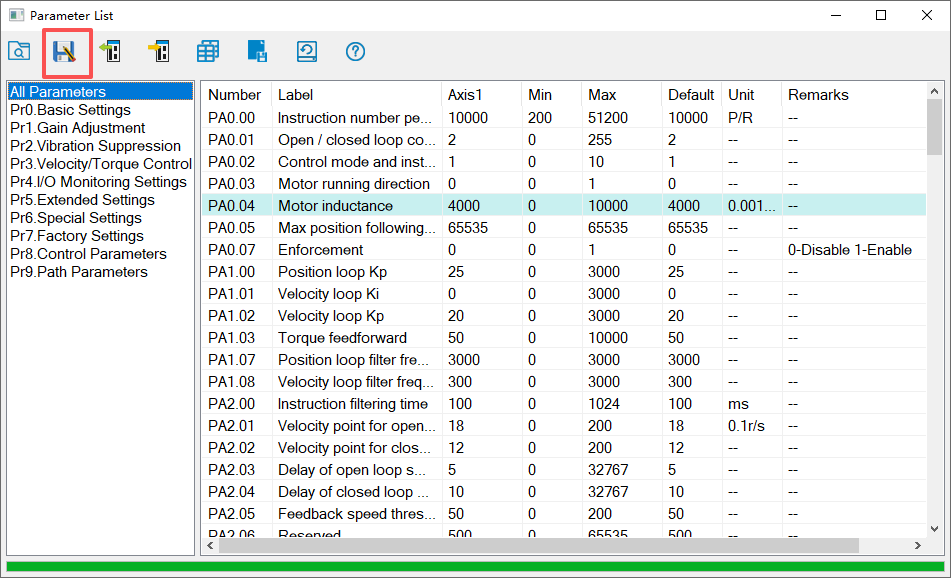
For low-speed or high-speed motor vibration, adjust parameters gradually. Avoid large changes when modifying parameter values. Once you observe improvement, test the motor at the corresponding low-speed or high-speed range. Proceed to adjust other parameters only when the current vibration condition is deemed acceptable.