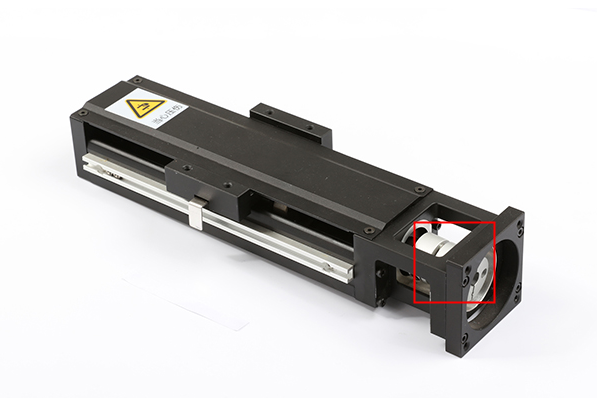
Whether a linear actuator uses a coupling affects its performance and suitability for different applications. The key trade-offs can be evaluated across three dimensions: structure, cost, and accuracy. Below is a brief comparison.
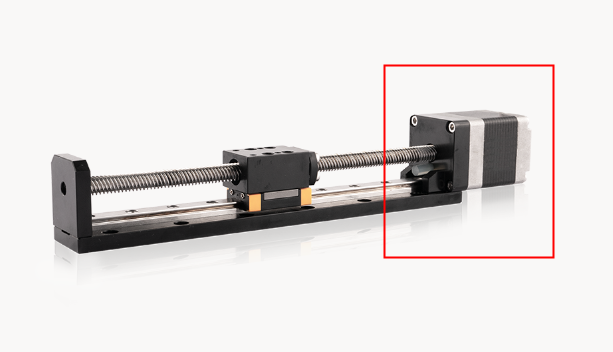
1. Linear Actuator Without Coupling
Advantages:
- Simple structure: Since no coupling is used, there is no need to design a separate mounting structure for one.
- Low cost: This type of linear actuator consists only of a motor and a linear guide rail, making it relatively simple and inexpensive to manufacture.
- Potentially higher precision: Without the elasticity and torsional hysteresis introduced by a coupling, the system can achieve better response speed and positioning accuracy — provided that manufacturing and installation tolerances are tightly controlled.
Disadvantages:
- Higher manufacturing and installation precision is required: Without a coupling to compensate for misalignment, any misalignment between the motor shaft and the drive mechanism (e.g., ball screw or lead screw) may directly degrade the performance of the linear actuator. Tighter manufacturing and installation tolerances are therefore essential.
2. Linear Actuator With Coupling
Advantages:
- Compensates for misalignment: Due to manufacturing and installation tolerances, there may be axial, radial, or angular misalignment between the motor shaft and the drive mechanism (e.g., ball screw). A coupling effectively absorbs these misalignments and reduces their impact on the performance of the linear actuator.
- Reduces load on drive components: The coupling smoothly transmits motor torque to the carriage, reducing shock and wear on the drive components and extending their service life.
- Convenient maintenance and replacement: If the motor fails, it can be disconnected and replaced promptly without disturbing the rest of the assembly.
Disadvantages:
- Increases system complexity and cost: Using a coupling requires a more complex design and additional components, which may increase overall system cost.
- May affect response speed and accuracy: Although a coupling compensates for misalignment and reduces mechanical loads, it may also introduce elasticity and torsional hysteresis, which can affect the system's response speed and positioning accuracy.