Linear stepper motors are a common solution for achieving precise linear positioning. By integrating the lead screw and stepper motor into a single unit, they eliminate the need for a coupling, saving installation space and improving system assembly efficiency.
Based on their structural design, linear stepper motors can be divided into three types: external linear stepper motors, non-captive linear stepper motors, and captive linear stepper motors. A modular platform that integrates a linear stepper motor with additional components is referred to as a linear actuator.
External Linear Stepper Motor
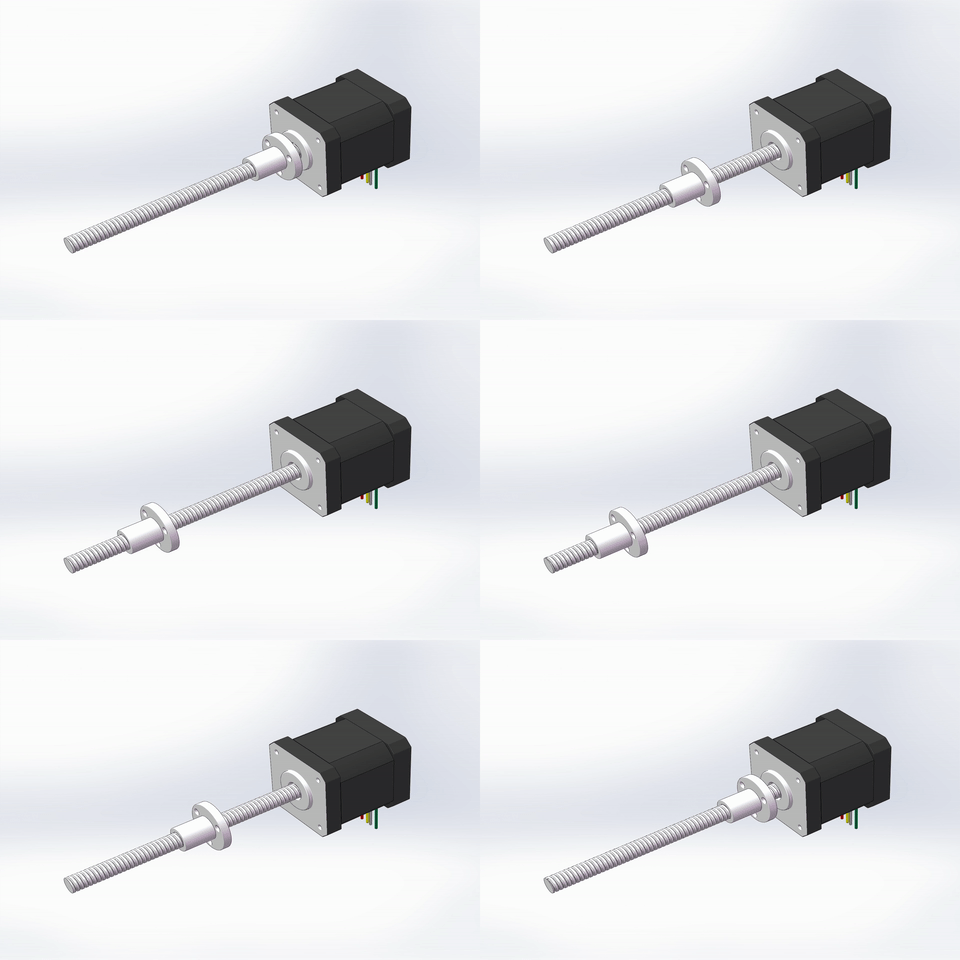
The lead screw of the External Linear Stepper Motor is integrated with the motor rotor and serves as the motor's output shaft. The drive nut is located outside the motor, engages with the lead screw, and is connected to the driven mechanism. When the motor rotates, the nut moves linearly along the lead screw.
Non-Captive Linear Stepper Motor
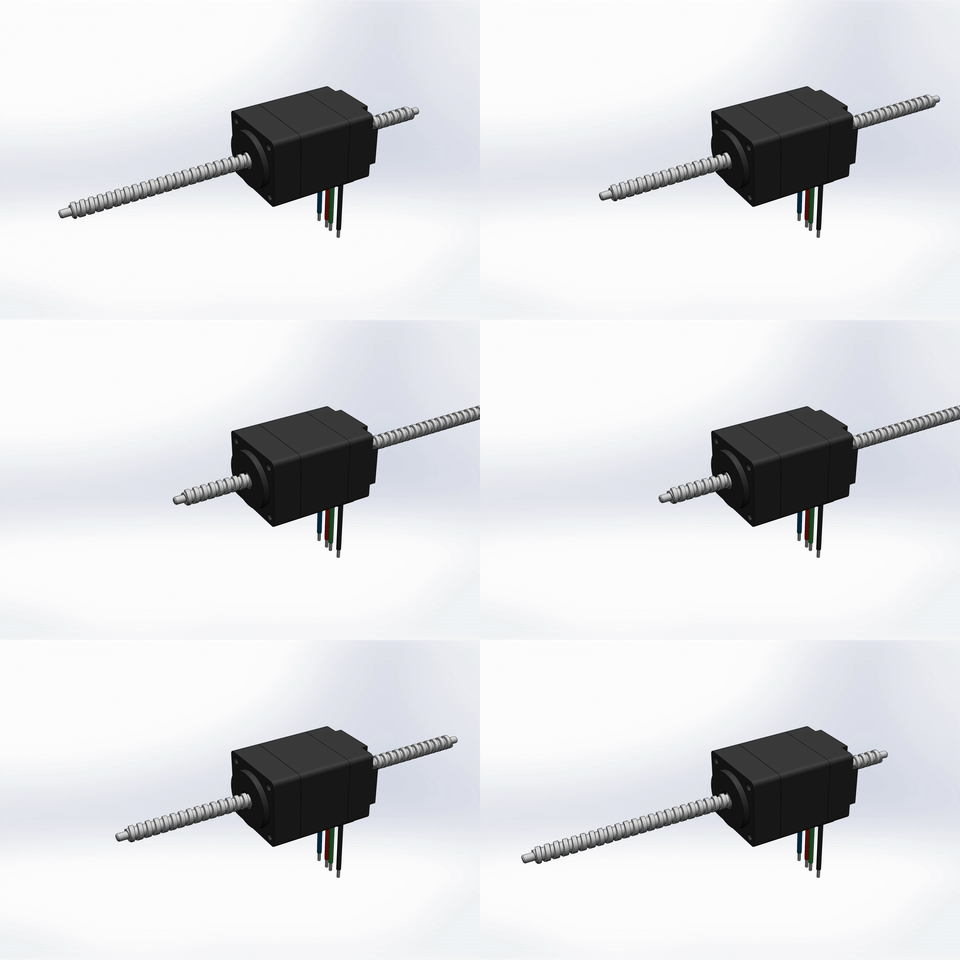
In the non-captive linear stepper motor, the nut is integrated with the motor rotor, and the lead screw passes through the center of the rotor. This type supports two installation configurations:
- Configuration 1: Secure the motor body and constrain the lead screw against rotation (e.g., using a guide rail or anti-rotation mechanism). When the rotor turns, the lead screw extends or retracts linearly.
- Configuration 2: Fix the lead screw in place and leave the motor body unconstrained. When the rotor turns, the entire motor travels linearly along the lead screw.
Captive Linear Stepper Motor
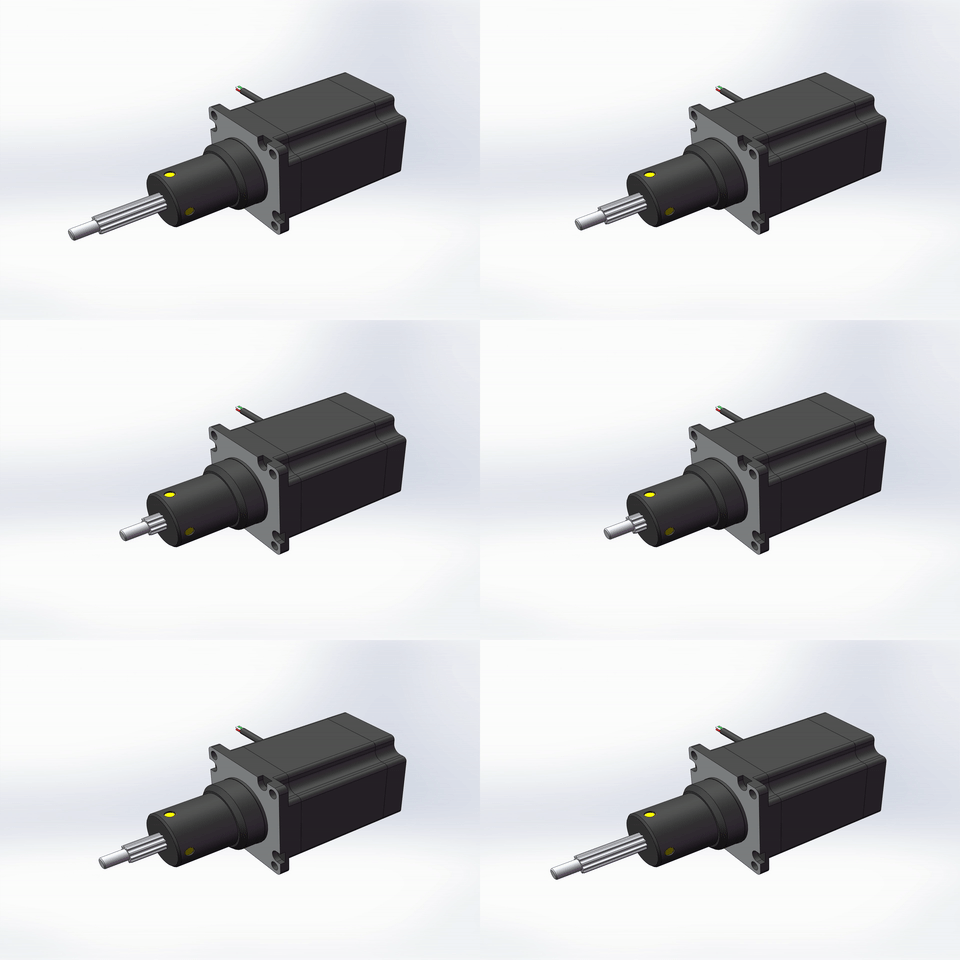
In the captive linear stepper motor, the nut is integrated with the motor rotor, and the lead screw passes through the center of the rotor. The lead screw is connected to an actuator rod (plunger), and an anti-rotation mechanism (such as a keyed guide or spline) prevents the lead screw from rotating. When the motor starts, the rotating nut drives the lead screw and the attached plunger to move linearly.
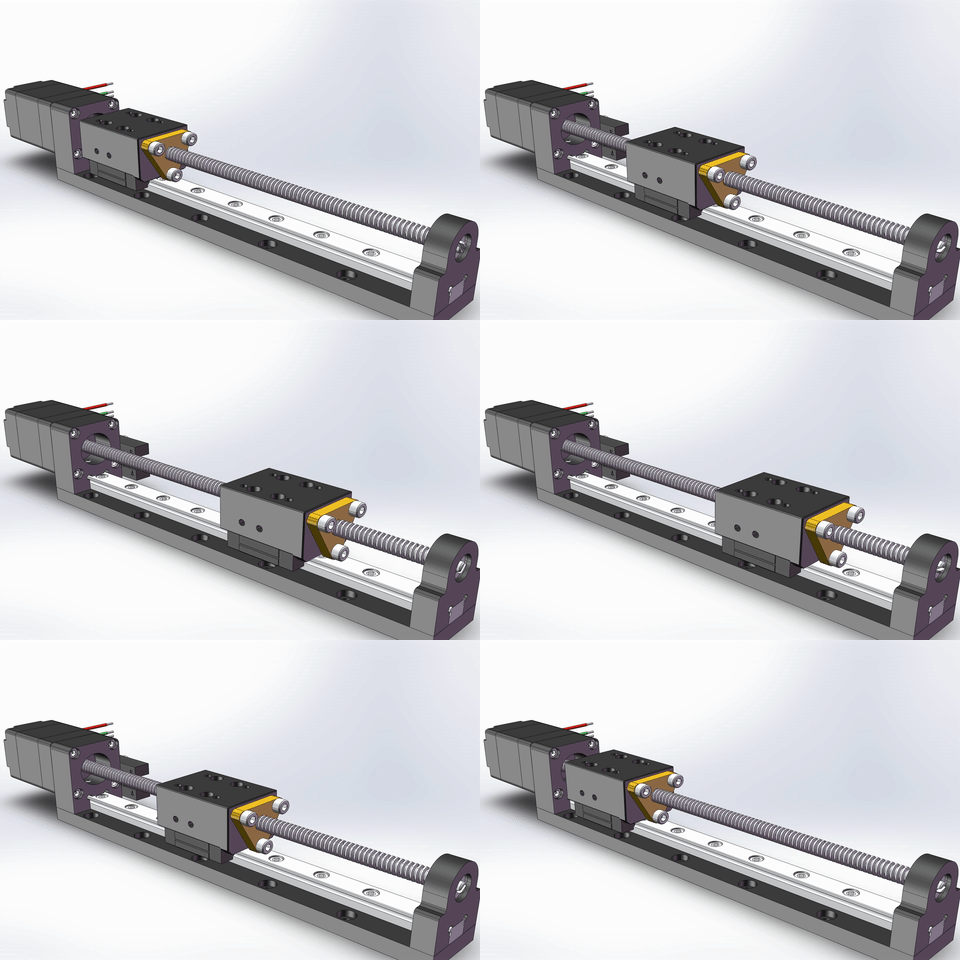
Linear Actuator
A linear actuator is a highly integrated motion platform that converts rotational motion into smooth and precise linear motion. It integrates multiple components such as linear motors, drive circuits, and sensors. The guide rail system and drive system are precisely assembled and integrated into a single unit.