Some STEPPERONLINE motors feature 8 leads, allowing a variety of wiring configurations depending on the speed and torque requirements of your application.
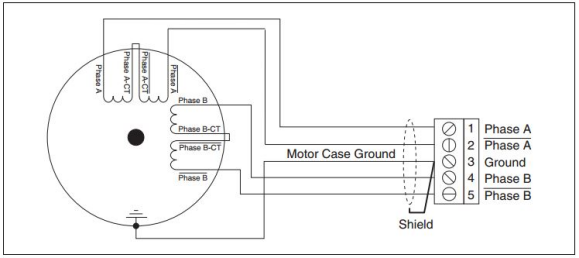
An 8-lead stepper motor can have its phase windings connected in either series or parallel. The figure below shows the series connection method, where the two windings of each phase are connected in series. This configuration is very similar to a 6-lead connection and provides the highest torque per ampere, at the expense of high-speed performance.
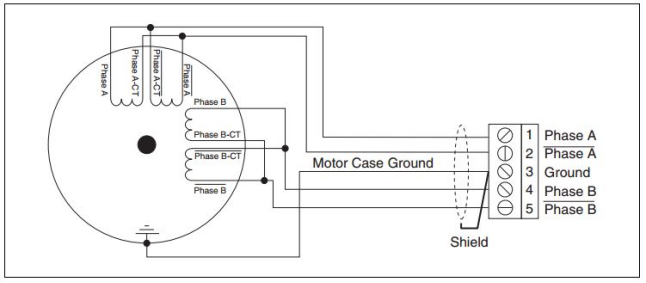
As shown in the figure below, an 8-lead stepper motor can also be wired with the two windings of each phase connected in parallel. This method enables better high-speed operation but requires greater current to produce the rated torque. This type of connection is sometimes referred to as parallel bipolar wiring.
Although the operating principles of stepper motors are fundamentally the same regardless of wiring, it is important to understand the differences between each configuration and select the appropriate wiring method for your specific application.
-
Series Connection is suitable for low-speed, high-torque applications. When connected in series, the resistance and inductance of the windings approximately double. The motor runs smoothly at low speeds with less noise and heat, and places lower demands on the driver's current output capability. However, torque drops off significantly at higher speeds.
-
Parallel Connection is suitable for applications that require high-speed performance. The two windings of each phase are connected in parallel, and the resistance and inductance of the windings are approximately halved. The motor delivers strong acceleration and maintains higher torque at elevated speeds. However, this configuration requires twice the rated current compared to the series connection. The higher current generates more heat and places greater demands on the driver's current output capability. Setting the drive current above the motor's rated value for parallel connection will cause excessive heat and reduce the motor's lifespan.